Maintaining a 10kW solar system in China is usually affordable, but its yearly cost is not a fixed number. System location, roof design, inverter quality, dust levels, and service distance can change the bill significantly. A rooftop system in dusty northern China may need more cleaning than one in a rainy southern city. Small details matter.
So, what are the maintenance costs for a 10kw solar system? Industry reports provide useful benchmarks, but they do not replace a local inspection. The IEA PVPS Task 13 reports that photovoltaic operation and maintenance costs commonly depend on system size, access, monitoring, and corrective repairs. NREL’s photovoltaic operations research also separates routine maintenance from major component replacement, especially inverter failures. This distinction is important. A simple average can mislead.
For a Chinese 10kW installation, routine annual expenses may include visual inspections, remote monitoring, electrical testing, vegetation control, and occasional panel cleaning. Many owners may spend roughly RMB 1,000 to RMB 3,000 per year, excluding inverter replacement or storm damage. Remote rural sites can cost more because technicians travel farther. Urban rooftops may reduce travel costs but create stricter access requirements. Cleaning is not always necessary every month. Over-cleaning wastes money and water.
This guide compares practical service items, regional price differences, and long-term replacement risks. It also examines warranty coverage and maintenance contracts. The figures should be treated as planning estimates, not promises. Actual invoices deserve careful review. That is where many budgets fail.
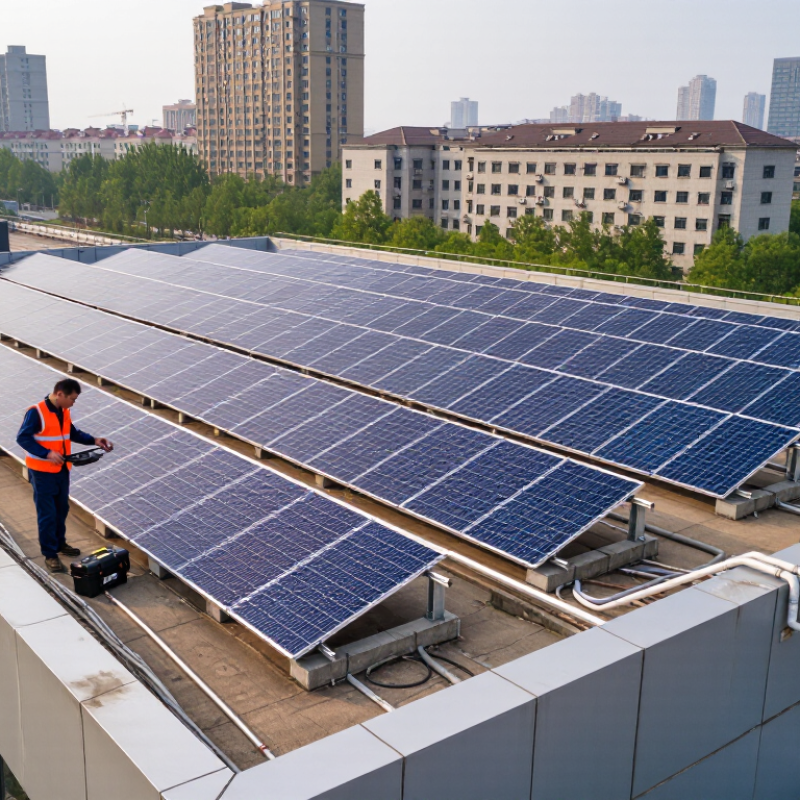
10kW Solar System Components and China Maintenance Cost Benchmarks
China Top 10kW Solar System Maintenance Cost Guide
A typical 10kW solar system in China includes photovoltaic modules, a grid-tied inverter, mounting rails, DC cables, AC protection, monitoring equipment, and grounding parts. Battery storage is optional and changes maintenance needs significantly. On a tiled rooftop, technicians usually inspect cable connections, sealing points, rail bolts, and inverter ventilation.
For a grid-connected system without batteries, routine maintenance commonly costs 1,500 to 4,000 RMB per year. This range usually covers two to four cleaning visits, electrical testing, monitoring checks, and minor repairs. Cleaning may cost 300 to 800 RMB per visit, depending on roof access, dust levels, and local labor rates. Coastal areas may require more frequent corrosion checks. Northern sites often need attention after winter snow and strong winds.
Inverter servicing can add 500 to 1,500 RMB annually when cooling fans, filters, or communication parts need replacement. A major inverter failure may cost 3,000 to 8,000 RMB, excluding difficult lifting or emergency labor. These figures are practical benchmarks, not fixed quotations. Real invoices rarely match neat estimates. Some installers underprice routine visits, then charge heavily for travel and testing. A detailed service agreement should state response time, cleaning frequency, replacement-part coverage, and whether monitoring data reviews are included. Small omissions matter. Even a loose connector can reduce output and create unnecessary troubleshooting costs.
Annual O&M Costs: Why Most Systems Require 1%–2% of CAPEX
China Top 10kW Solar System Maintenance Cost Guide
Annual O&M usually requires 1%–2% of the system’s original CAPEX. This benchmark appears in professional asset-management practice and aligns with cost categories discussed by IRENA and the International Energy Agency Photovoltaic Power Systems Programme. For a 10kW system costing CNY 60,000, the annual allowance becomes CNY 600–1,200. The figure is practical, not universal.
A basic plan includes remote performance checks, visual inspections, wiring reviews, inverter cleaning, and safety testing. In northern China, dust and snow can increase cleaning frequency. Coastal sites may need earlier corrosion checks. NREL’s PV O&M best-practice research identifies labor, equipment faults, vegetation, and monitoring as recurring cost drivers. Small systems still need professional attention.
Keep records.
A technician should compare monthly output against irradiance and previous-year data. A sudden 8%–10% decline deserves investigation, even when the inverter shows no alarm. Cleaning costs may remain modest, but replacement parts can disrupt the budget. In my view, the 1%–2% rule is a useful planning floor, not a promise. It can underestimate costs for polluted roofs, difficult access, or weak monitoring. It can also overstate costs when owners handle routine visual checks safely. IRENA’s renewable power cost reports support the broader lesson: long-term operating expenses depend heavily on site conditions and system design. A spreadsheet cannot measure every rooftop problem.
China Top 10kW Solar System Maintenance Cost Guide - Annual O&M Costs: Why Most Systems Require 1%–2% of CAPEX
Illustrative annual operations and maintenance (O&M) budget for a grid-connected 10 kW photovoltaic system in China. Costs are shown in RMB and exclude major equipment replacement, financing, taxes, and electricity tariffs.
| Maintenance Item |
Typical Frequency |
Annual Quantity |
Unit Cost (RMB) |
Annual Cost (RMB) |
Scope and Assumptions |
| Routine visual inspection |
Quarterly |
4 visits |
150–300 |
600–1,200 |
Check modules, mounting structures, cable routes, labels, drainage, and visible damage. |
| Solar panel cleaning |
1–2 times per year |
1.5 services |
500–900 |
750–1,350 |
Assumes roof access is available and soiling is moderate; more frequent cleaning may be required in dusty areas. |
| Electrical inspection and testing |
Annual |
1 service |
600–1,200 |
600–1,200 |
Includes visual checks of DC/AC isolators, connectors, grounding, distribution equipment, and selected voltage measurements. |
| Monitoring and performance review |
Monthly |
12 reviews |
30–70 |
360–840 |
Review production data, communication status, alarms, abnormal shutdowns, and year-on-year yield. |
| Vegetation, shading, and roof-area control |
1–2 times per year |
1 service |
300–800 |
300–800 |
Applicable where trees, weeds, nearby construction, or roof obstructions can create shading or access problems. |
| Minor consumables and corrective work |
As required |
Annual allowance |
500–1,500 |
500–1,500 |
Covers small cable ties, labels, fasteners, waterproofing materials, connector work, and minor call-outs. |
| Estimated routine annual O&M cost |
3,110–6,890 |
Typical planning range before major component replacement. |
Annual O&M Cost Compared with Installed CAPEX
| Installed System CAPEX |
1% Annual O&M |
1.5% Annual O&M |
2% Annual O&M |
Interpretation |
| RMB 50,000 |
500 |
750 |
1,000 |
Lower-cost installation with simple access and low soiling. |
| RMB 70,000 |
700 |
1,050 |
1,400 |
Typical reference point for a standard grid-connected 10 kW system. |
| RMB 100,000 |
1,000 |
1,500 |
2,000 |
Higher-cost site with more complex access, monitoring, or electrical equipment. |
| RMB 150,000 |
1,500 |
2,250 |
3,000 |
Use the upper percentage when the site has difficult access or harsher environmental conditions. |
Cost-planning note:
The 1%–2% CAPEX rule is a budgeting benchmark rather than a fixed tariff. Actual cost depends on system location, roof height, cleaning requirements, labor access, monitoring arrangements, local service rates, and equipment complexity. Inverter replacement, battery replacement, storm damage, and major electrical repairs should be budgeted separately.
Panel Cleaning, Inspection, and 0.3%–0.8% Annual Degradation
For a 10kW solar system in China, maintenance is usually modest, but neglect becomes expensive.
Panel cleaning often costs about RMB 300–800 per visit, depending on roof access, city, and dust. Two visits yearly are reasonable near construction sites or dry northern areas. Coastal roofs may need more frequent visual checks because salt deposits can dull the glass. Qualified technicians should use soft water, non-abrasive tools, and insulated equipment. Do not walk on panels.
A professional inspection commonly costs RMB 500–1,500, excluding replacement parts. It should cover cable connectors, mounting bolts, junction boxes, inverter readings, earthing, and hot spots. Thermal imaging can reveal a warm connection before it causes sudden production loss. Record monthly generation, error codes, unusual sounds, and cleaning dates. Small records matter. A weak point is inconsistent monitoring; many owners only check the system when electricity output feels low.
Panel output normally declines about 0.3%–0.8% annually, depending on technology, heat, humidity, and installation quality. After ten years, a 10kW array might produce roughly 9.2–9.7kW under comparable conditions. However, soiling can make degradation appear worse. Compare seasonal sunlight before blaming aging. If output drops suddenly, inspect shading, loose connections, inverter faults, or monitoring errors. Maintenance cannot stop aging, but it can prevent avoidable losses. That distinction deserves more attention.
Inverter Servicing and the Typical 10–15-Year Replacement Cycle
For a 10kW solar system in China, inverter maintenance deserves more attention than panel cleaning.
Dust, humidity, heat, and unstable ventilation can increase internal stress. A qualified technician should inspect cooling fans, terminals, protection devices, and error records at least once yearly. A typical visit may cost about RMB 300–800, depending on location and access.
Inverter servicing usually includes voltage testing, firmware checks, insulation measurements, and cleaning around air vents. Technicians should also tighten connections carefully.
Loose terminals can create heat marks or intermittent shutdowns. Keep the inspection report, photographs, and replaced-part details. These records help identify repeated faults and support warranty discussions.
Most residential and small commercial inverters serve for roughly 10–15 years. The actual cycle depends on operating temperature, daily load, moisture, and maintenance quality.
Replacement costs for a 10kW unit may range from RMB 4,000–12,000, excluding complex rewiring or elevated installation work. Prices change with supply conditions.
I would not treat fifteen years as a promise. Some units fail earlier, while others continue operating beyond that period with reduced efficiency.
A replacement plan should begin around year ten, especially when alarms become frequent or repair parts become difficult to source.
My own maintenance estimates are not perfect, because local labor rates and site conditions vary more than many online guides suggest.
China’s 10kW Solar Maintenance Budget: Labor, Parts, and Risk Reserves
China Top 10kW Solar System Maintenance Cost Guide
A 10kW rooftop system in China usually needs an annual maintenance budget of RMB 3,000–7,000. This estimate covers labor, replacement parts, testing, and risk reserves. Local labor often costs RMB 300–800 per visit, depending on roof height and travel distance. A technician may spend two to four hours checking wiring, mounting bolts, protection devices, and inverter alarms. IRENA’s Renewable Power Generation Costs report shows that solar PV operation and maintenance costs remain relatively low, but small systems still face higher service costs per kilowatt. Residential access is the problem.
Parts require a separate reserve. Keep RMB 800–2,500 yearly for connectors, fuses, surge protection, cooling fans, and damaged cables. A larger inverter repair can exceed RMB 2,000, while storm damage may involve labor and scaffolding. NREL’s distributed solar cost benchmarks support using a fixed annual reserve instead of waiting for failure. For a 10kW system, RMB 2,000–5,000 is a practical risk fund. It may feel excessive. It is not always enough.
Tips: Schedule one inspection before summer and another before winter. Record each string’s voltage and monthly generation. Clean panels only when dust visibly reduces output. Do not assume a low first-year bill means low lifetime cost. The China National Energy Administration continues reporting strong distributed PV growth, which may increase demand for qualified maintenance workers and affect regional service prices. Keep invoices, test readings, and repair photos. Small records prevent expensive arguments.
Conclusion
A 10kW solar system in China typically includes photovoltaic panels, an inverter, mounting structures, cables, protection devices, and monitoring equipment. What are the maintenance costs for a 10kw solar system? In general, annual operation and maintenance expenses are often estimated at around 1%–2% of the system’s original capital cost. This budget usually covers routine inspections, performance checks, electrical testing, safety reviews, and basic troubleshooting.
Panel cleaning is an important task, especially in dusty or polluted areas, while regular inspections can identify loose connections, corrosion, shading, or abnormal output. Solar panels may experience approximately 0.3%–0.8% annual performance degradation, so production should be monitored over time. Inverter servicing may involve software checks, ventilation cleaning, and component testing, with replacement commonly considered after 10–15 years. A practical maintenance budget should also include labor, spare parts, transport, and a reserve for unexpected repairs, helping ensure stable generation and predictable long-term operating costs.

 Ran Solar