10 Reasons Why Solar Panels Need Bypass Diodes?

Time:2026-05-19 Author:Aria
0%

As the solar industry continues to grow, understanding why do solar panels need bypass diodes is essential. According to the International Renewable Energy Agency (IRENA), global solar power capacity reached 810 gigawatts in 2020. This rapid expansion highlights the importance of optimizing solar panel performance. Bypass diodes are crucial components that enhance efficiency and longevity.

Bypass diodes help mitigate the effects of shading on solar panels. When a section of a panel is shaded, the entire system can suffer a drop in energy output. Reports indicate that shaded panels can lose over 80% of their output. Bypass diodes allow current to bypass the shaded cells, preventing significant energy loss. This functionality maximizes performance in varied conditions, ensuring that solar energy remains a reliable source.

The need for bypass diodes becomes even clearer when considering extreme weather and environmental factors. In regions prone to storms or heavy tree cover, panels may frequently experience shading. Hence, integrating bypass diodes becomes a necessity, ensuring that solar systems maintain efficiency regardless of external challenges. Understanding these aspects underscores the critical role that bypass diodes play in the success of solar energy solutions.
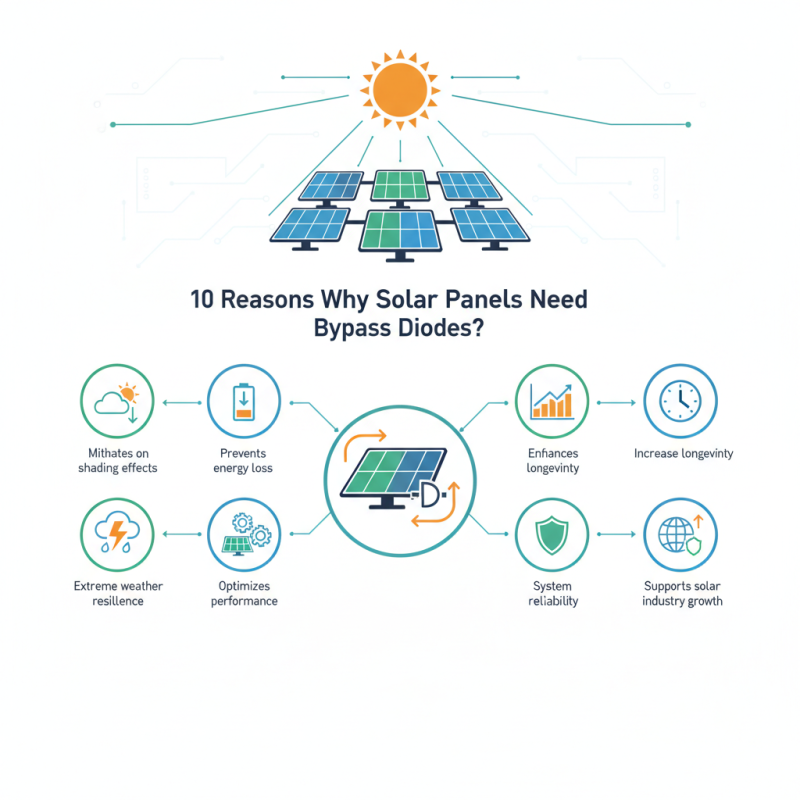
10 Reasons Why Solar Panels Need Bypass Diodes?

Importance of Bypass Diodes in Solar Panel Functionality

Bypass diodes play a vital role in the functionality of solar panels. They mitigate the impact of shading on solar cells, ensuring that the entire panel continues to generate power efficiently. When a part of a solar panel is shaded, it can cause a significant drop in performance. Without bypass diodes, this shaded area might pull down the entire module's output. Bypass diodes are connected in parallel with solar cells, allowing current to bypass the shaded portion, thereby maintaining energy production.

Moreover, bypass diodes protect against hot spots. Hot spots occur when one cell in a string is less efficient, leading to overheating. This can damage the solar panel over time. By allowing current to flow around the faulty cell, bypass diodes help maintain uniform temperatures across the panel. This protective measure not only prolongs the lifespan of the solar panels but also enhances their overall efficiency. While many manufacturers include bypass diodes, not all designs implement them effectively. It is essential to evaluate the specific design and ensure that bypass diodes are properly integrated. This aspect of solar panel design is often overlooked, yet it significantly influences performance and reliability.

10 Reasons Why Solar Panels Need Bypass Diodes

Reason Description
1. Prevent Hotspots Bypass diodes mitigate the risk of hotspots in solar panels, which can occur when a single cell is shaded and overheats.
2. Improve Efficiency They allow current to flow around shaded cells, maintaining overall panel output and improving efficiency.
3. Enhance Lifespan Protecting solar cells from damage extends the lifespan of solar panels by preventing overheat conditions.
4. Enable Partial Shading Bypass diodes make solar panels functional even when partially shaded, increasing versatility in installation.
5. Reduce Power Loss They help minimize power loss caused by uneven shading among the cells.
6. Low Maintenance Bypass diodes require little to no maintenance, making them a reliable choice for solar energy systems.
7. Cost-Effective Solution Adding bypass diodes is a relatively low-cost modification that can lead to improved performance.
8. Increased Output Stability They contribute to stable power output under varying sunlight conditions.
9. Foster System Reliability Bypass diodes increase overall system reliability by preventing cell failure from causing complete panel loss.
10. Safety Features They enhance safety by reducing risk of fires caused by overheating cells.

How Bypass Diodes Prevent Power Loss in Solar Arrays

Bypass diodes play a crucial role in solar arrays, particularly in preventing power loss. When a solar panel experiences shading or damage, the overall output can drop significantly. According to recent industry reports, shaded solar panels can lose up to 50% of their output. Bypass diodes mitigate this issue by rerouting current around the affected sections. This strategy helps maintain the overall efficiency of the solar array.

Studies indicate that panels equipped with bypass diodes can improve performance by up to 20% under partial shading conditions. For instance, if one panel is shaded, the bypass diode allows current to flow from the unshaded panels, keeping the array functioning more effectively. Without these diodes, the entire string could be affected, leading to drastic drops in power production.

While bypass diodes are vital, they can also introduce complexities. The heat generated by diodes under high current can lead to thermal degradation, which could cause a reduction in lifespan for some systems. Regular maintenance and monitoring are crucial for identifying potential issues before they escalate. The balance between efficiency and longevity is important to consider for solar installations.

The Role of Bypass Diodes in Maintaining Output Efficiency

Bypass diodes play an essential role in solar panel performance. They prevent power loss by rerouting current around shaded or faulty cells. When a solar cell is partially shaded, it can dramatically reduce output. For example, shaded cells can lose up to 50% of their efficiency. This issue reinforces the need for bypass diodes, which maintain better overall system output.

A study by the National Renewable Energy Laboratory indicates that systems with bypass diodes can enhance energy yield by 20% in some conditions. This improvement is critical as solar energy adoption grows. Diodes help mitigate “hot spots,” which occur when cells are underperforming, protecting the panel from damage. However, the installation of bypass diodes is not without its challenges. Improper placement or inferior quality can lead to inefficiencies.

Many designers overlook these factors, potentially causing long-term consequences. Awareness of the importance of reliable bypass diodes is crucial for installers. Even industry experts acknowledge that while bypass diodes mitigate shading effects, they cannot fully eliminate energy losses. Addressing these technical nuances ensures optimal solar panel performance and longevity.

10 Reasons Why Solar Panels Need Bypass Diodes

Bypass diodes play a crucial role in maintaining the output efficiency of solar panels. They help prevent power loss during shading, improve performance under low light conditions, and enhance the overall reliability of solar systems.

Impact of Partial Shading on Solar Panel Performance with Bypass Diodes

Partial shading is a significant issue in solar panel performance. When one part of a solar panel is shaded, it can affect the entire system's output. Bypass diodes play a crucial role in mitigating this effect. They allow the shaded sections to be bypassed, ensuring that the unshaded sections continue to produce electricity efficiently. Without these diodes, shaded panels can become major energy sinks, reducing overall energy harvest.

Tips: Regular maintenance is vital. Check for shading from trees, buildings, or debris. Even small obstructions can lead to performance drops. It's also essential to understand how different light conditions impact your panels. Seasonal changes can cause varying degrees of shading, affecting daily performance.

In some cases, the positioning of solar panels may need re-evaluation. If shading is frequent, consider relocating or redesigning the setup. Planning for optimal sun exposure can significantly enhance efficiency. Using bypass diodes helps, but proactive management can further improve energy output. Be mindful of the potential for shading throughout the year. Knowing when and where your panels are impacted by shade is crucial for maximizing solar energy use.

Common Issues Addressed by Bypass Diodes in Solar Systems

When solar panels operate, shading on any part can hinder performance. Bypass diodes come to the rescue in these situations. They allow current to bypass underperforming cells. This ensures the entire panel continues to operate efficiently. Without them, shaded cells can significantly decrease energy output.

Common issues arise in solar systems, particularly with temperature variations. High temperatures can cause hotspots, leading to damage. Bypass diodes mitigate this by preventing overheating. They improve the reliability of the solar system, offering peace of mind for users. Be aware that not all systems have these diodes installed.

Tips: Always inspect your solar panels for shading. Regular maintenance can prevent common issues. During installation, ensure bypass diodes are included. This small addition can save you from larger repairs later. Even if your system is running well, reflecting on its efficiency is essential. Consider how weather impacts your power generation.

FAQS

: What are bypass diodes in solar panels?

: Bypass diodes help maintain power generation when parts of a solar panel are shaded.

How do bypass diodes improve solar panel efficiency?

They allow current to bypass shaded cells, preventing a drop in overall energy output.

What risks do bypass diodes mitigate in solar panels?

They prevent overheating and hot spots, which can damage solar panels over time.

Why is it important to evaluate the design of bypass diodes?

Not all solar panel designs implement bypass diodes effectively, affecting performance and reliability.

What happens if a solar panel doesn't have bypass diodes?

Shaded areas can significantly decrease the panel's energy output without these diodes.

How often should I inspect my solar panels?

Regular inspections can help identify shading issues and prevent performance problems.

What impact does weather have on solar panel efficiency?

Weather conditions can influence power generation, so it's important to evaluate overall system efficiency.

How can improper installation affect a solar system?

Without bypass diodes, users risk larger repairs later due to uneven panel performance.

What is a common misconception about solar panel maintenance?

Many users overlook the need for regular checks, which can lead to efficiency issues.

What should I consider when installing solar panels?

Ensure that bypass diodes are included and positioned correctly in the design.

Conclusion

Solar panels require bypass diodes for several critical reasons, primarily tied to enhancing their functionality and efficiency. Bypass diodes are essential components that prevent power loss in solar arrays by allowing current to circumvent shaded or malfunctioning cells. This capability is particularly important when addressing partial shading, which can significantly diminish solar panel performance. In such scenarios, bypass diodes help maintain overall output efficiency, ensuring that the functioning cells continue to generate electricity even if some are compromised.

Moreover, bypass diodes tackle common issues faced by solar systems, such as hot spots and uneven power distribution. By facilitating a more balanced flow of electricity, they protect the solar panels from damage and prolong their lifespan. Thus, understanding why do solar panels need bypass diodes is fundamental for optimizing solar energy systems and maintaining peak performance, even under less-than-ideal conditions.

Aria

Aria

Aria is a dedicated marketing professional with a deep passion for innovative strategies and a keen understanding of our company's product offerings. With a wealth of experience in the industry, Aria excels at crafting engaging content that highlights the unique features and benefits of our......