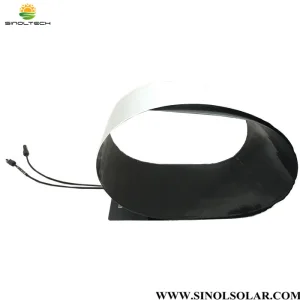
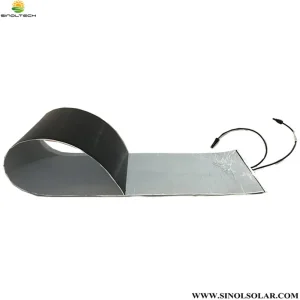
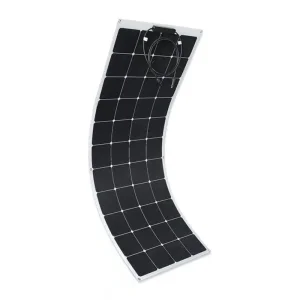
Japan is currently undergoing a massive energy transformation. With the government's pledge to achieve carbon neutrality by 2050, the demand for innovative solar solutions has skyrocketed. Unlike traditional markets, Japan faces unique challenges: limited flat land, dense urban centers, and strict seismic building codes. This is where Flexible Solar Sheets become the game-changer for the Japanese market.
In cities like Tokyo and Yokohama, skyscrapers and curved architectural designs are common. Our flexible sheets can be integrated directly into building facades (Building Integrated Photovoltaics), turning every surface into a power generator without adding significant weight.
Japan's automotive and rail industries are looking toward solar-integrated EVs and trains. The aerodynamic requirements of the Shinkansen and modern electric vehicles demand thin, flexible, and durable CIGS technology that can contour to any shape.
Global Production Capacity
Countries Served
Total Global Deployment
Patented Technologies
As a premier Flexible Solar Sheets Manufacturer & Supplier, we understand the rigorous quality standards (JIS) and environmental conditions in Japan. From the humid summers of Okinawa to the heavy snowfalls in Hokkaido, our products are engineered to perform.
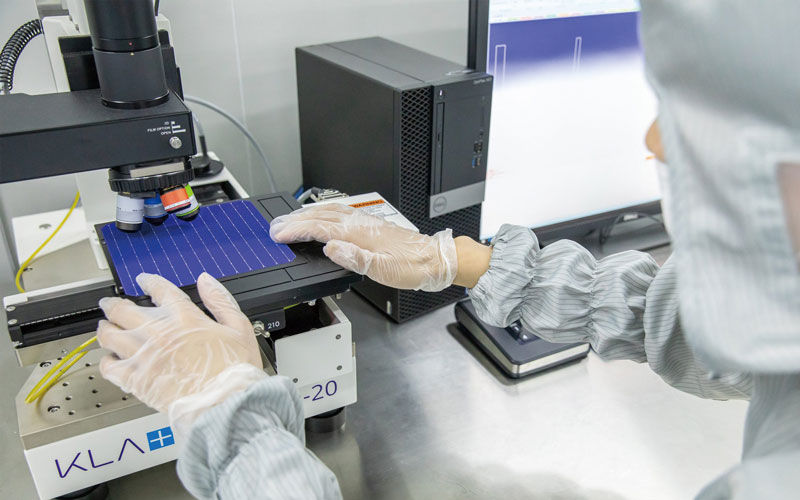
Our CIGS (Copper Indium Gallium Selenide) technology offers superior performance in low-light conditions, which is critical for Japan's rainy seasons. The ETFE (Ethylene Tetrafluoroethylene) coating ensures high light transmittance while providing self-cleaning properties and extreme durability against salt-mist corrosion in coastal regions like Chiba and Fukuoka.
As a leading solar products manufacturer, Anhui Ran Solar Co., Ltd. specializes in the research, development, production, and global sales of high-quality solar PV products. Since our establishment in 2011, Anhui Ran Solar has achieved remarkable milestones, surpassing many competitors in production capacity, innovative designs, and technological advancements. We firmly believe that innovation drives progress, and we continually pursue new technologies and higher efficiencies to empower a sustainable energy future.
Currently, Anhui Ran Solar boasts a global production capacity of 7.5 GW, serving customers across more than 80 countries with premium products and professional services. By the end of 2023, over 15 GW of our solar modules have been deployed worldwide, powering residential, commercial, and utility-scale projects.
Partner With Us in JapanInnovation is at the core of Anhui Ran Solar’s strategy. We provide a full spectrum of advanced renewable energy technologies to meet the unique needs of every customer, whether utilities, commercial enterprises, or industrial clients. Our dedicated R&D team continuously explores next-generation solar solutions, including high-efficiency modules, bifacial technologies, and smart energy solutions.
At Anhui Ran Solar, our modularized, fully automated production lines enable rapid delivery, optimized costs, and consistent quality. We have segmented the production process into closely coordinated, automated sectors to maximize efficiency and minimize human error. Over 40 patented technologies have been implemented to optimize production processes.
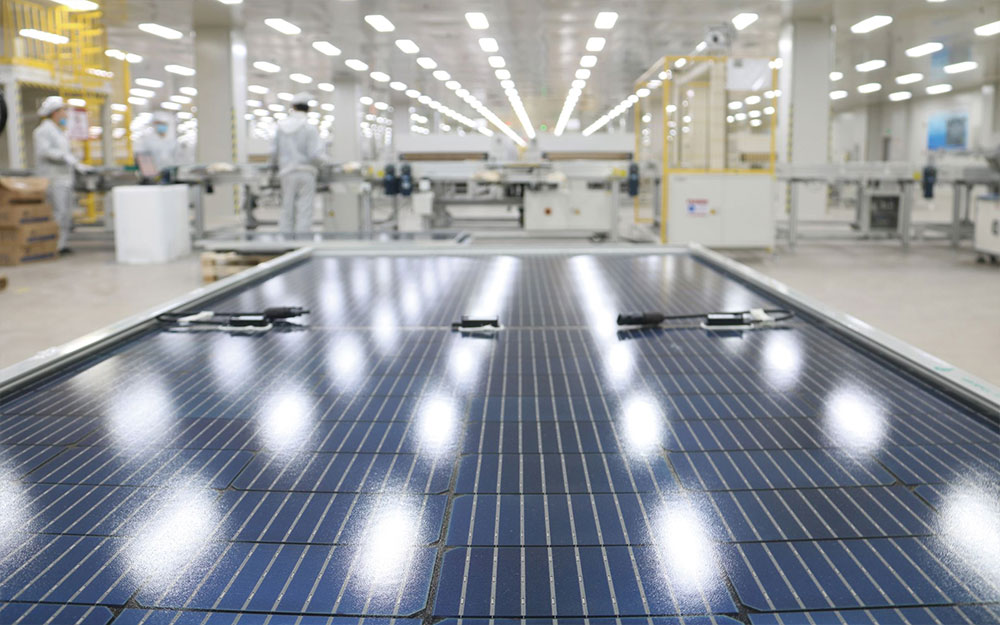
Stringent quality control is the cornerstone of our operations. Our customers expect—and receive—uncompromising quality and performance, even in the most extreme conditions.
Quality Management System Certification for consistent excellence.
Environmental Management System for sustainable production.
Occupational Health and Safety Management System.
Join the renewable revolution with Japan's most trusted flexible solar supplier.
Send Inquiry NowThe Japanese solar market is currently in a state of rapid transition. Historically dominated by large-scale mega-solar projects in rural areas, the focus has shifted toward urban self-consumption and decentralized energy systems. This shift is driven by the reduction of Feed-in-Tariffs (FIT) and the rise of the Feed-in-Premium (FIP) scheme, encouraging businesses to use the energy they produce. Flexible solar sheets are at the forefront of this movement because they allow for the utilization of "non-traditional" surfaces. In cities like Tokyo, where roof space is often occupied by HVAC systems, the ability to apply lightweight PV sheets to the sides of buildings or over curved skylights is invaluable.
Furthermore, Japan's vulnerability to natural disasters such as earthquakes and typhoons makes the "resilience" factor of flexible solar sheets highly attractive. Unlike heavy, brittle glass panels that can shatter or pose a structural risk during seismic activity, flexible CIGS modules are shatterproof and exert minimal stress on building structures. This makes them ideal for disaster evacuation centers and temporary housing in regions like Tohoku and Kumamoto. The integration of solar technology into Japan's world-class manufacturing sector also presents opportunities for "Agrivoltaics"—the simultaneous use of land for both solar power and agriculture—where lightweight, semi-transparent flexible sheets can be used in greenhouses without blocking necessary sunlight for crops.
As a manufacturer, we are committed to supporting Japan's "Green Growth Strategy." Our R&D efforts are focused on increasing the conversion efficiency of our flexible modules to compete with rigid crystalline silicon, while maintaining the unique form-factor advantages of thin-film technology. We work closely with Japanese engineering firms to ensure our mounting systems meet the strict wind-load requirements of the Japan Meteorological Agency's standards. By choosing our flexible solar sheets, Japanese developers are not just buying a product; they are investing in a sustainable, resilient, and technologically advanced future.
 Ran Solar