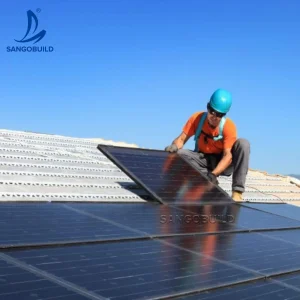
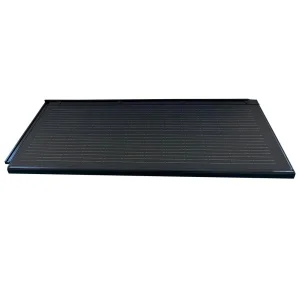
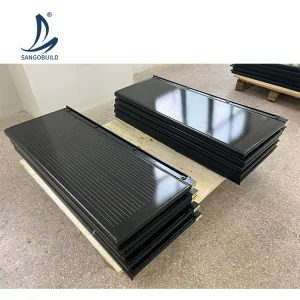
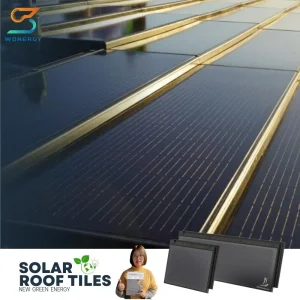
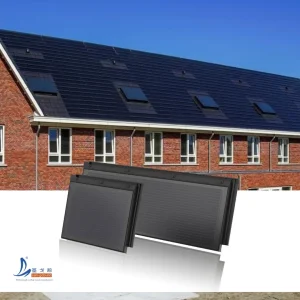
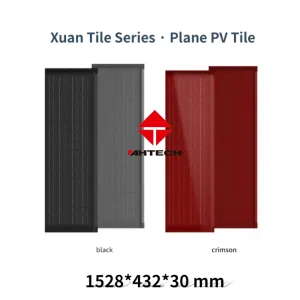
Direct-factory BIPV solutions customized for the specific climate profile and structural frameworks of Asunción, Ciudad del Este, and regional Paraguay. Our integrated tiles act as both premium building envelopes and high-yield power generators.
Paraguay presents a unique and highly dynamic energy environment. While historically boasting surplus renewable electricity generation driven by massive binational hydroelectric assets—namely Itaipu and Yacyretá—the national grid faces systemic vulnerabilities, transmission line bottlenecks, and skyrocketing peak demand charges during intense sub-tropical summers. For commercial and industrial (C&I) enterprises in Asunción, Ciudad del Este, and agricultural hubs like Encarnación, energy security and peak demand shaving have shifted from secondary options to critical economic imperatives.
In this context, Building Integrated Photovoltaics (BIPV) represent the next evolution of local architectural and industrial engineering. Unlike traditional utility-scale solar farms or standard rack-mounted photovoltaic arrays, BIPV modules function as primary structural elements. They replace traditional roofing materials, curtain walls, and industrial cladding with power-generating surfaces. This eliminates dual material costs, significantly improves thermal insulation properties (reducing cooling loads), and provides on-site, decentralized generation without consuming land assets.
Paraguay experiences high levels of solar irradiance (averaging 5.0 to 6.5 kWh/m²/day), combined with extreme heat, high humidity, and severe weather events including convective storms and large-scale hail. Standard retrofitted solar arrays are prone to wind-lift issues and add substantial static load to existing roof architectures. BIPV systems from Anhui Ran Solar Co., Ltd. are engineered to address these specific regional pain points:
As a leading solar products manufacturer, Anhui Ran Solar Co., Ltd. specializes in the research, development, production, and global sales of high-quality solar PV products. Since our establishment in 2011, Anhui Ran Solar has achieved remarkable milestones, surpassing many competitors in production capacity, innovative designs, and technological advancements. We firmly believe that innovation drives progress, and we continually pursue new technologies and higher efficiencies to empower a sustainable energy future.
Currently, Anhui Ran Solar boasts a global production capacity of 7.5 GW, serving customers across more than 80 countries with premium products and professional services. By the end of 2023, over 15 GW of our solar modules have been deployed worldwide, powering residential, commercial, and utility-scale projects. Our dedicated logistical and engineering support network ensures that projects in South America, particularly in Paraguay's expanding commercial corridors, receive optimized product supplies and installation guidance.
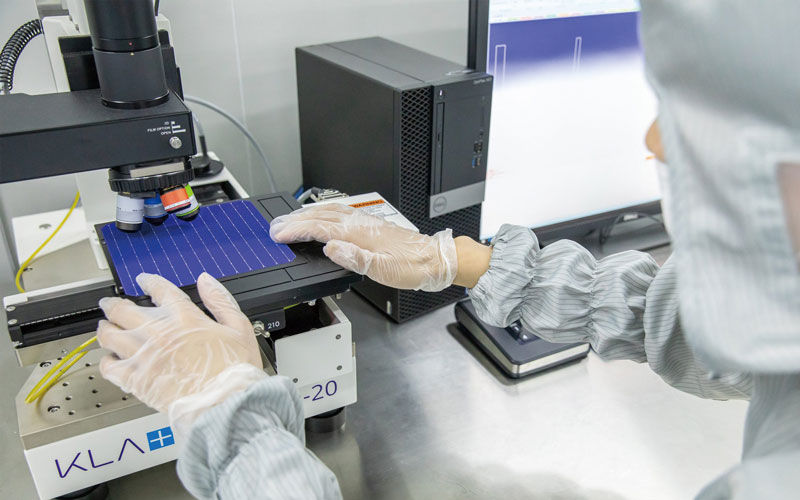
Innovation is at the core of Anhui Ran Solar’s strategy. We provide a full spectrum of advanced renewable energy technologies to meet the unique needs of every customer, whether utilities, commercial enterprises, or industrial clients. Our dedicated R&D team continuously explores next-generation solar solutions, including high-efficiency modules, bifacial technologies, and smart energy solutions. We invest heavily in state-of-the-art laboratory equipment and recruit top-tier engineering talent, ensuring that our products remain at the cutting edge of the renewable energy industry. This relentless pursuit of technological innovation enables our customers to achieve higher performance, reduced costs, and superior reliability in their solar installations.
At Anhui Ran Solar, our modularized, fully automated production lines enable rapid delivery, optimized costs, and consistent quality. We have segmented the production process into closely coordinated, automated sectors to maximize efficiency and minimize human error. Over 40 patented technologies have been implemented to optimize production processes, covering every stage from raw material inspection to final packaging. Each step is monitored and recorded in real time, ensuring traceability, precision, and reliability across our manufacturing operations.
Stringent quality control is the cornerstone of our operations. Our customers expect—and receive—uncompromising quality and performance, even in the most extreme conditions. Anhui Ran Solar invests continuously in advanced testing equipment and professional employee training to maintain these high standards. Our products have achieved certifications for Quality Management System (ISO 9001:2015), Environmental Management System (ISO 14001:2015), and Occupational Health and Safety Management System (ISO 45001:2018) from both DNV GL and GZCC, reflecting our commitment to excellence, sustainability, and workplace safety.
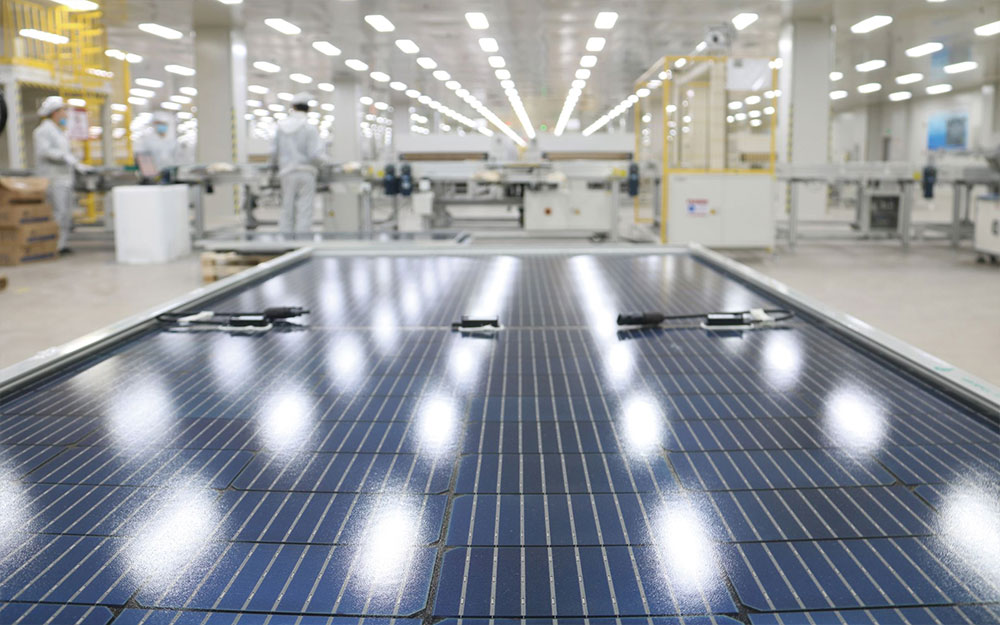
Evaluating the exact parameters of Building Integrated Photovoltaic systems is crucial for architects, structural engineers, and EPC contractors. Below is a comparative matrix outlining the performance parameters of our core BIPV product classifications.
| Product Category | Primary Material | Power Output Density | Temperature Coefficient | Mechanical Load Limit | Optimal Application (Paraguay) |
|---|---|---|---|---|---|
| Double-Glass Solar Shingles | Tempered Glass-Glass (Mono-Si) | 180W - 210W / m² | -0.35% / °C | 5400 Pa (Snow) / 2400 Pa (Wind) | Residential & Commercial High-End Roofs |
| Stone Coated Metal PV Tiles | Galvanized Steel + PV Overlay | 140W - 165W / m² | -0.38% / °C | 3000 Pa (Wind Uplift Resistance) | Agro-Industrial Warehouses & Retrofits |
| CdTe Thin Film BIPV Glass | Cadmium Telluride Thin-Film | 90W - 120W / m² | -0.21% / °C | 2400 Pa (Wind Load) | Commercial Skylights & Facade Curtain Walls |
| High-Efficiency Flat Glass Tiles | High-Transmittance Curved Glass | 175W - 195W / m² | -0.36% / °C | 5400 Pa (Frontal Impact Load) | Urban Commercial Centers & Supermarkets |
Explore our extensive range of high-efficiency, building-integrated PV systems engineered for long-term mechanical stability, electrical optimization, and seamless integration into modern construction designs.
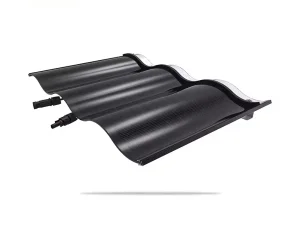
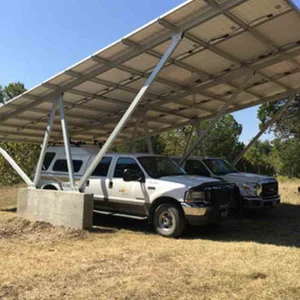
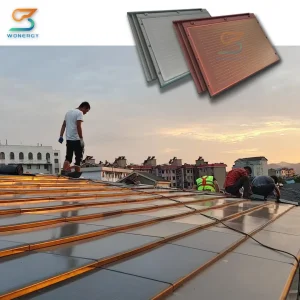
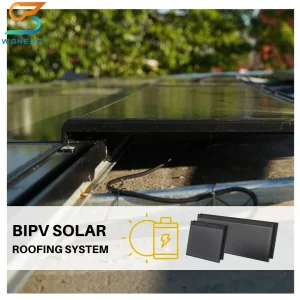
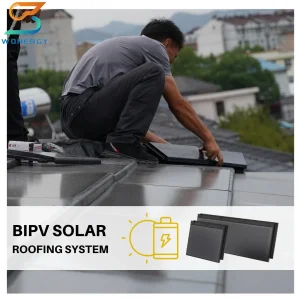
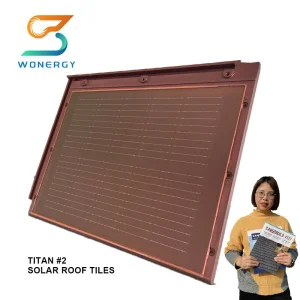

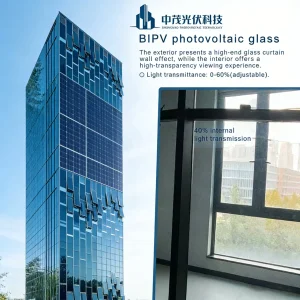
Architectural PV solutions for structural facades, glass curtain walls, and specialized building integration mounting systems tailored for optimal tilt angle calculations and structural load distributions.
Implementing a commercial-scale BIPV project in Paraguay requires strict compliance with local regulatory frameworks, grid injection standards managed by the Administración Nacional de Electricidad (ANDE), and local municipal structural guidelines. In recent years, ANDE has formalized pathways for distributed generation, allowing commercial entities to feed surplus power back into the grid under specific net-metering schemes. This regulation dramatically increases the ROI viability of high-capacity installations by eliminating the immediate need for oversized, costly battery storage arrays.
Under the national standardization body, INTN (Instituto Nacional de Tecnología, Normalización y Metrología), BIPV installations must satisfy specific electrical safety and mechanical load criteria. For architectural projects, particularly multi-story facades or public-access commercial developments in Asunción, materials must adhere to strict fire safety classification standards (typically Class A rating under international equivalents). Because our BIPV products are manufactured in highly automated, ISO-certified environments and carry globally recognized certifications (TÜV SÜD, CE, UL, DNV GL), importing entities can easily fast-track compliance approvals with local engineering municipalities.
To incentivize clean energy transitions, the Paraguayan government offers tax and import duty exemptions for capital goods and renewable technology imports under the legislative framework of Ley 60/90. Developers sourcing BIPV products directly from Anhui Ran Solar Co., Ltd. can leverage these exemptions to completely bypass the standard tariffs applied to building materials. Our international logistics team manages door-to-port or door-to-site shipping coordinates via major regional hubs, guaranteeing safe transit and clearance to final destinations in Paraguay.
Find expert answers to structural, regulatory, and financial questions regarding the implementation of BIPV systems in Paraguay.
Our BIPV modules are engineered with low temperature-coefficient cells (down to -0.35%/°C) and custom back-ventilation channels. This limits heat accumulation and maintains high output efficiency even when ambient temperatures exceed 40°C in regions like the Chaco or Asunción.
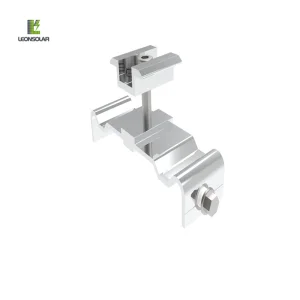
Yes. While ideal for new builds, our BIPV tiles can be retrofitted. We offer custom mounting solutions (such as our Building Integrated Mounting Systems) that adjust to traditional metal or concrete purlins, maintaining weatherproofing while distributing mechanical weight safely.
We offer a 30-year performance warranty. Our high-efficiency monocrystalline double-glass tiles undergo strict PID (Potential Induced Degradation) testing, guaranteeing an annual degradation rate of less than 0.5%, maintaining at least 80% output after three decades.
Under distributed generation regulations, commercial consumers can connect their grid-tied BIPV systems through bi-directional meters. Excess power generated during peak solar hours is exported to the ANDE grid, generating credits that offset peak nocturnal consumption charges.
Our glass-glass BIPV shingles utilize high-strength tempered glass (up to 4mm thickness). They are certified under international IEC standards to resist the direct impact of 25mm hail stones at 80 km/h, preventing the micro-cracking common in standard modules.
No, they require minimal maintenance. The self-cleaning tempered glass coating allows natural rain to easily wash away dust and pollen. For flat or low-pitch installations, we recommend a simple semi-annual water rinse to ensure optimal light transmittance.
 Ran Solar